
Counters
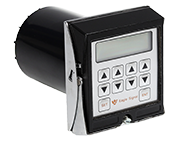
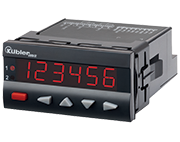
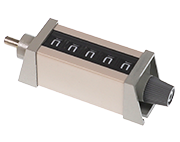
Industrial Counter Types and Applications
Electronic and electromechanical counters track how many times an event occurs so operators can monitor production, trigger actions at set quantities, and verify that machines are running as expected.
Counters accept pulses from sensors, switches, encoders, or PLC outputs, incrementing each time a product passes, a shaft rotates, or a cycle completes. In automation and control systems, they are used to track batch quantities, piece counts, cycle counts, machine run time, and length-based processes such as cutting or winding.
There are two common counter functions. Totalizing counters simply accumulate and display the total number of events. Predetermining counters count to a preset value and then provide a relay output to stop a machine, divert product, or advance to the next step. Multifunction counter-timers combine counting and timing modes in one device, giving greater flexibility for OEMs and panel builders.
Frequently Asked Questions
Do counters integrate with PLCs or SCADA systems?
Yes. Counters can provide input signals to PLCs or operate as stand-alone devices with relay or transistor outputs. Some models also support communication with higher-level control or monitoring systems.
Can counters handle high-speed production environments?
Yes. Many digital and electronic counters are designed to process high-frequency pulse inputs. When selecting a counter, review its maximum input frequency to ensure it can handle the speed of your application.
How do I connect a counter to my automation system?
Counters typically receive signals from proximity sensors, encoders, switches, or PLC outputs. Ensure that the input signal type and voltage match the counter’s specifications to guarantee accurate readings and stable performance.