
Wire Identification
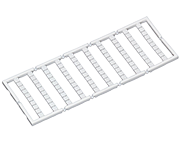
Wire identification products, including labels, markers, tags, and sleeves, are essential tools for organizing and documenting electrical wiring in control panels, cable harnesses, and industrial equipment. Clearly marked conductors improve installation quality, speed troubleshooting, simplify maintenance, and support compliance with wiring standards and safety practices.
In industrial environments where complex wiring systems are common, effective wire and cable identification reduces the risk of miswiring and reduces downtime associated with repair and expansion work. Wire identification solutions are used to mark individual wires, bundles, terminal points, and connection interfaces to ensure clarity throughout the life of a system.
Wire identification products are often used together with wire harnesses, terminal blocks, and wire duct to create well-organized, serviceable industrial wiring layouts.
Best Practices for Wire Identification in Industrial Systems
Effective wire identification improves safety, reduces wiring errors, and simplifies maintenance throughout the life of an electrical system. In industrial control panels and equipment, consistent labeling practices are essential for fast troubleshooting and safe modification work.
Best practices include establishing a clear and consistent identification scheme using numbering, color coding, or alphanumeric markers for power, control, and signal circuits. Labels should be applied near termination points such as terminal blocks, connectors, and splices, where identification is most critical during installation and service.
Both ends of every conductor should be labeled to ensure circuits can be identified regardless of access orientation. In dense wiring environments, wrap-around labels or heat-shrink wire markers provide more secure and legible identification than flat adhesive labels.
Label materials should be selected based on environmental exposure, including temperature, moisture, oils, vibration, and chemicals. Durable identification products help ensure markings remain readable over time. Wire identification should also align with panel schematics and wiring documentation to support accurate record keeping and efficient troubleshooting.
Frequently Asked Questions
How should I label shielded cable pairs?
For shielded cable pairs, label the individual conductors as well as the overall cable assembly. Use color codes or alphanumeric identifiers that correspond with wiring diagrams to maintain consistency.
What is the difference between wire markers and cable labels?
Wire markers are typically sleeves or heat-shrink identifiers applied directly to individual conductors. Cable labels are often adhesive or wrap-around products used on larger jacketed cables or harness bundles for circuit and routing identification.
Should wire identification include voltage or circuit function information?
In many industrial installations, labeling includes circuit numbers, voltage class, or functional identifiers. This improves technician awareness and reduces errors during troubleshooting or expansion.