
LED Drivers
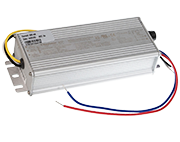
LED Drivers for Commercial and Industrial LED Lighting
LED drivers are power regulation devices used to supply and control electrical power for LED lighting systems. Unlike traditional lighting technologies, LEDs require a precise combination of current and voltage to operate correctly. LED drivers convert incoming electrical power and regulate it to ensure LEDs receive stable, consistent energy for reliable illumination and long service life.
In most lighting systems, electrical power is supplied as alternating current (AC), while LEDs operate using low-voltage direct current (DC). LED drivers convert AC input power into regulated DC output while maintaining the correct electrical characteristics required by the LED fixture. This regulation protects LEDs from voltage fluctuations, overheating, and premature failure.
LED drivers are typically classified as either constant current or constant voltage devices. Constant current drivers deliver a fixed current while adjusting voltage as needed to maintain consistent LED brightness and prevent overdriving the LEDs. Constant voltage drivers provide a fixed output voltage while allowing the current to vary depending on the connected load. Each type is designed for specific LED configurations and lighting applications.
Modern LED drivers often include advanced features such as dimming capability, power factor correction, thermal protection, and surge protection. These capabilities allow LED lighting systems to operate efficiently while supporting building automation systems, industrial control environments, and energy-efficient facility lighting strategies.
LED drivers are widely used in commercial buildings, manufacturing facilities, warehouses, outdoor lighting systems, and industrial workspaces where LED fixtures are installed. Selecting the correct driver ensures optimal performance, improved energy efficiency, and extended LED lifespan.
Frequently Asked Questions
What is power factor and why is it important for LED drivers?
Power factor measures how efficiently electrical power is used by a device. LED drivers with a high power factor (typically 0.9 or higher) reduce wasted energy and minimize reactive power in electrical systems. High power factor drivers are often required in commercial and industrial installations to meet energy efficiency regulations.
What dimming methods are supported by LED drivers?
Common LED driver dimming interfaces include 0-10V dimming, pulse-width modulation (PWM), DALI (Digital Addressable Lighting Interface), and TRIAC dimming. The dimming method must be compatible with both the lighting control system and the LED driver to ensure smooth brightness control.
What is surge protection in LED drivers?
Surge protectionsafeguards LED drivers and connected lighting systems from voltage spikes caused by lightning strikes, switching events, or electrical faults. Industrial-grade LED drivers often include integrated surge protection measured in kilovolts (kV) to help prevent damage to sensitive electronic components.