
LEDs
Industrial LEDs for Lighting and Indication Applications
Light-emitting diodes (LEDs) are semiconductor devices that produce light when electrical current flows through a p-n junction. During operation, electrons recombine with electron holes within the semiconductor material, releasing energy in the form of photons in a process known as electroluminescence. LEDs can produce light across visible, infrared, and ultraviolet wavelengths depending on the semiconductor materials used in their construction.
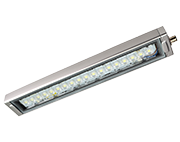
LED technology is widely used in industrial equipment, electronic devices, control panels, and lighting systems because of its high energy efficiency, long operating life, and compact size. Compared with traditional incandescent or gas-discharge lighting technologies, LEDs consume significantly less power while delivering higher luminous efficiency and improved durability. Their solid-state design also makes them resistant to vibration and mechanical shock, which is important in industrial environments.
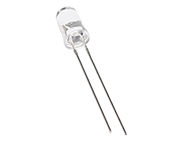
LEDs are available in several configurations to support different lighting and indication applications. Radial LEDs are commonly used in electronic assemblies, circuit boards, and panel indicators where through-hole mounting is required. These components provide reliable visual signaling and are frequently integrated into control panels, machine indicators, and instrumentation displays.
LED bars are multi-segment LED components designed to provide linear visual indication. They are often used in measurement equipment, signal displays, and status indicators where multiple LEDs arranged in a row can represent levels, progress, or system conditions.
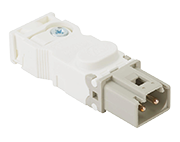
In addition to LED devices themselves, LED accessories help support installation, protection, and system integration. These accessories may include mounting hardware, holders, lenses, and other components that allow LEDs to be securely installed within equipment panels or lighting assemblies.
Because of their fast switching speeds, high efficiency, and long operational life, LEDs are widely used in industrial lighting systems, electronic indicators, display panels, and machine status signaling. Selecting the appropriate LED type and accessories helps ensure reliable operation and optimal performance in demanding electrical and industrial environments.
Frequently Asked Questions
What advantages do LEDs have compared to traditional lamps?
LEDs offer several advantages over traditional incandescent and gas-discharge lamps, including higher energy efficiency, longer operating life, faster switching speeds, and greater resistance to vibration and mechanical stress. These characteristics make LEDs well suited for industrial and electronic applications.
What is the viewing angle of an LED?
The viewing angle defines the spread of light emitted from the LED and is measured in degrees. LEDs with narrow viewing angles produce concentrated light for directional indicators, while wider viewing angles provide broader illumination suitable for displays and status indicators.
What thermal considerations are important for LED components?
Although LEDs are highly efficient, they still generate heat that must be dissipated to maintain performance and lifespan. Proper thermal management, including adequate PCB design, heat sinking, and ventilation, helps prevent junction temperature from exceeding recommended limits.