
Belts
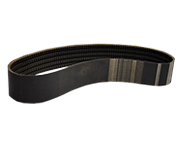
Industrial Belts for Power Transmission and Motion Control
Industrial belts are flexible mechanical components used to transmit power and motion between rotating shafts. Belt drive systems are widely used in motors, conveyors, fans, pumps, compressors, and automated machinery because they provide efficient power transfer, vibration damping, and relatively quiet operation.
Power transmission belts operate by transferring mechanical energy through friction or positive engagement with pulleys or sprockets. Friction-drive belts, such as flat belts and V-belts, rely on surface contact to transmit torque, while synchronous or timing belts use molded teeth that mesh with pulley grooves to prevent slippage and maintain accurate speed ratios.
Industrial belts are commonly used alongside other motion control components such as electric motors and bearings to support rotating shafts and enable reliable power transmission in mechanical systems.
Several types of industrial belts are used depending on load requirements, speed, and application conditions. V-belts are among the most widely used belt types due to their ability to transmit moderate to high torque in compact drive systems. Timing belts, also known as synchronous belts, provide precise motion control and are used in applications where accurate positioning or speed synchronization is required.
Flat belts are often used in high-speed or long-distance drive systems where smooth operation and flexibility are important, while round belts and specialty belts are used in compact machinery or specialized industrial environments. Proper belt selection helps reduce slippage, minimize vibration, and extend the service life of both the belt and connected drive components.
Industrial belt performance is influenced by factors such as tensioning, alignment, pulley design, load characteristics, and environmental exposure. Selecting the correct belt type ensures efficient power transmission, reduced maintenance requirements, and reliable machine operation.
Frequently Asked Questions
How does belt tension influence performance?
Proper tension ensures efficient power transfer and reduces slippage, vibration, and premature belt wear.
What causes industrial belt failure?
Common causes include improper tensioning, misalignment, contamination by oil or debris, excessive load, and operating beyond temperature limits.
What is belt slip and how can it be prevented?
Belt slip occurs when friction between the belt and pulley is insufficient to transmit torque. Proper tensioning, correct belt selection, and pulley maintenance help prevent slip.