
Couplings
Industrial Shaft Couplings for Power Transmission and Misalignment Compensation
A coupling is a mechanical device used to connect two shafts together at their ends for the purpose of transmitting torque and rotational motion. The primary function of a coupling is to join rotating equipment while allowing for a degree of shaft misalignment, axial movement, or both.
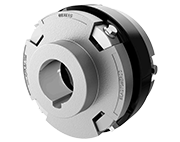
Couplings are commonly used to transfer power from an electric motor to driven equipment such as pumps, fans, compressors, conveyors, and gearboxes. They also help provide mechanical flexibility within drive systems, reduce the transmission of shock loads and vibration between connected components, and can act as a protective element by slipping or failing in a controlled manner during torque overload conditions.
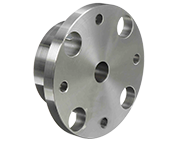
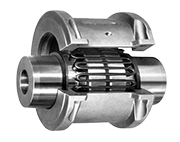
Many coupling designs use two hubs mounted on the shaft ends, with an intermediate element that transmits torque while accommodating misalignment. In some designs, rigid metallic components engage through gear teeth or disc packs, while flexible couplings may use elastomeric elements or spring grid structures to absorb vibration and compensate for shaft movement.
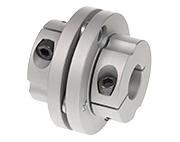
Disc couplings use thin metallic disc packs to transmit torque with high torsional rigidity and minimal backlash. These couplings are commonly used in high-speed and precision motion control applications.
Elastomeric couplings use flexible polymer elements to absorb shock loads, damp vibration, and accommodate angular and parallel misalignment. They are widely used in general industrial machinery and pump drive systems.
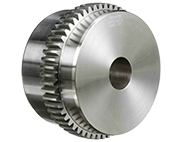
Gear couplings feature meshing internal and external gear teeth that allow high torque transmission while accommodating moderate misalignment. These couplings are commonly used in heavy-duty industrial applications.
Grid couplings use a spring steel grid element that fits into hub grooves to transmit torque while providing shock absorption and vibration damping.
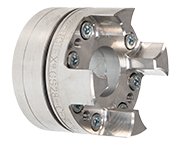
Coupling assemblies typically incorporate shaft hubs that secure the coupling to the shaft using keys, set screws, or clamping mechanisms. Proper hub selection and installation are critical for maintaining alignment and ensuring reliable torque transmission.
Correct coupling selection depends on torque requirements, shaft size, misalignment conditions, speed, environmental exposure, and system dynamics. Using properly sized couplings improves equipment reliability, reduces mechanical wear, and enhances overall drive system performance.
Frequently Asked Questions
What types of misalignment can couplings accommodate?
Couplings can compensate for angular misalignment, parallel misalignment, and axial displacement depending on design and flexibility characteristics.
What is the difference between rigid and flexible couplings?
Rigid couplings provide precise shaft alignment but do not accommodate misalignment, while flexible couplings allow movement and absorb shock loads.
What is torsional stiffness in a coupling?
Torsional stiffness refers to a coupling's resistance to twisting under load. Higher stiffness improves motion accuracy but reduces shock absorption.