
Hall-Effect Pick Ups
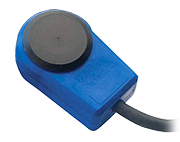
Hall-Effect Pick Ups
A Hall-Effect pickup, also known as a Hall sensor, detects magnetic fields and turns them into electrical signals. When a magnet moves close to the sensor, it creates a small voltage change. This signal helps confirm position, movement, speed, or even electrical current.
In practice, these pickups are used whenever a system needs to detect position or speed without touching the part. For example, in switches, pistons, or valves, a small magnet moves with the mechanical part. The sensor senses the magnet and signals if the device is open or closed, or it can act as the switch itself.
Hall sensors are also common in brushless DC motors. Here, they detect the rotor's position and speed. This feedback enables the motor controller to accurately time electrical pulses, control speed, and handle braking. Without precise position data, the drive system couldn't work efficiently or reliably.
Since Hall-Effect pickups sense magnetism rather than physical contact, they are durable and ideal for applications where wear, vibration, or dirt might damage mechanical switches. For related troubleshooting and verification tools, see Multimeters.
Types of Hall Effect Pick Ups
- Hall effect pick ups used for speed detection in rotating machinery.
- Sensors intended for position sensing in automation and control systems.
- Pick ups designed for industrial environments where durability and repeatability are important.
Key Selection Criteria for Hall Effect Pick Ups
Choosing the correct Hall effect pickup requires evaluating several technical factors:
- Target type and sensing approach used in the application.
- Operating voltage and output type compatibility with the control system.
- Sensing distance and response behavior for the speed or position requirement.
- Mounting method and installation constraints.
- Environmental conditions such as temperature, vibration, and contamination.
Selecting a sensor aligned to the control system and environment helps support stable feedback and reliable operation. For startup and control components, see Soft Starters.
Frequently Asked Questions
What are Hall effect pickups used for?
They are used for speed, position, and motion sensing in industrial systems where magnetic sensing supports control feedback and monitoring needs.
How do I choose a sensor for my speed or position application?
Start with the target and required sensing behavior, then confirm compatibility with the control system's input requirements and the environment where it will operate.
What installation and mounting factors should I consider?
Consider mounting style, sensing distance, alignment to the target, and environmental exposure such as vibration or contamination to help ensure repeatable sensing performance. For verifying system inputs during troubleshooting, Multimeters can support electrical checks.
