
Ethernet Extenders
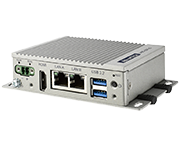
Ethernet Extenders for Long-Distance Industrial Network Connectivity
Ethernet extenders are networking devices used to extend Ethernet communication beyond the standard 100-meter cable limitation. They enable reliable data transmission over long distances, making them ideal for industrial environments where devices are spread across large facilities or remote locations.
Extend Network Distance
Ethernet extenders allow networks to reach areas that are not accessible with standard Ethernet cabling.
- Extend Ethernet beyond 100 meters
- Support distances ranging from hundreds of meters to several kilometers depending on technology
- Maintain stable communication between remote devices
These capabilities make them well suited for connecting equipment across buildings, production lines, or outdoor installations.
Use Existing Cabling Infrastructure
One of the main advantages of Ethernet extenders is their ability to leverage existing wiring:
- Operate over copper, coaxial, or telephone lines
- Reduce the need for new cable installation
- Provide a cost-effective alternative to fiber upgrades
This makes them ideal for retrofit projects and legacy system upgrades.
Industrial Applications
Ethernet extenders are commonly used in a wide range of industrial and commercial applications:
- Remote monitoring and control systems
- Security and surveillance networks
- Transportation and infrastructure systems
- Factory automation and process control
Flexible and Easy Deployment
Most Ethernet extenders are designed for quick installation and minimal configuration:
- Plug-and-play setup for fast deployment
- DIN rail or panel mounting options
- Compatibility with existing Ethernet switches, gateways & routers, and media converters
Some models also support Power over Ethernet (PoE), allowing both data and power transmission over a single cable.
Ethernet extenders provide a practical solution for expanding industrial networks without major infrastructure changes. By enabling long-distance communication over existing cabling, they help improve connectivity, reduce costs, and support scalable network design.
Frequently Asked Questions
How far can Ethernet extenders transmit data?
Ethernet extenders can transmit data over distances ranging from a few hundred meters to several kilometers, depending on the technology used, such as VDSL or SHDSL, and the type of cabling.
Do Ethernet extenders affect network speed?
Ethernet extenders generally maintain network performance, but speed may vary depending on distance, cable quality, and transmission technology. Longer distances may result in reduced bandwidth.
What types of cables can Ethernet extenders use?
Ethernet extenders can operate over various types of existing cabling, including twisted-pair copper, coaxial cable, and telephone lines, allowing flexible deployment without new infrastructure.