
Chart Recorders
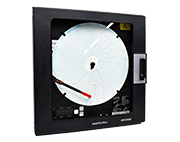
Chart Recorders for Continuous Data Logging and Process Monitoring
Chart recorders are used to continuously record process variables over time, providing a visual and permanent record of system performance. These instruments track inputs such as temperature, pressure, flow, or electrical signals and display them on paper charts or digital interfaces. This makes chart recorders essential for applications requiring historical data logging, process validation, and regulatory compliance.
In industrial environments, chart recorders are commonly used in temperature monitoring, quality control processes, laboratory testing, and environmental tracking. They are frequently paired with devices such as thermocouples for temperature measurement, transducers for pressure or flow signals, and current transformers or shunts for electrical monitoring. For real-time visibility, they are often used alongside panel meters & gauges.
Chart recorders are available in multiple formats, including circular and strip chart designs, as well as hybrid and fully digital models. Selection depends on the number of input channels, required recording duration, chart type, and signal compatibility. In applications where maintaining process conditions is critical, chart recorders are often integrated with control components such as regulators or used in systems supported by heat tracing and heat tracing accessories to ensure stable operating conditions.
When selecting a chart recorder, key considerations include input signal type, recording accuracy, sampling rate, data retention requirements, and environmental conditions. Additional factors such as connectivity, alarm capabilities, and ease of data retrieval may also influence selection. Properly chosen chart recorders provide reliable documentation, improve process visibility, and support informed decision-making in industrial operations.
Frequently Asked Questions
What maintenance is required for chart recorders?
Maintenance includes replacing chart paper, refilling ink or pens, verifying calibration, and ensuring proper operation of input channels and recording mechanisms.
How do chart recorders handle signal noise or unstable inputs?
Many recorders include filtering or damping features to smooth out signal fluctuations. Proper wiring, shielding, and grounding are also important to minimize noise and ensure accurate recordings.
What are common causes of inaccurate chart recordings?
Common causes include improper calibration, incorrect scaling, signal noise, worn mechanical components, and environmental factors such as temperature fluctuations.