
Force Gauges
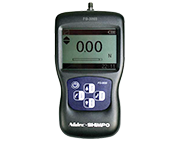
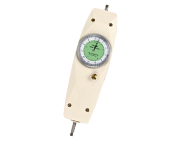
Force Gauges for Tension, Compression, and Load Measurement Applications
Force gauges are used to measure applied force in tension and compression applications, providing accurate feedback for testing, inspection, quality control, and equipment setup. These devices are commonly used to verify pull force, push force, material strength, spring tension, switch actuation force, and mechanical load conditions in industrial, laboratory, and production environments.
In practical applications, force gauges help operators and technicians confirm that components, assemblies, and materials meet required performance specifications. Digital force gauges are often selected when precise readings, data output, peak hold functions, or repeatable testing are required. Mechanical force gauges are commonly used for straightforward force measurement where simplicity, durability, and portability are important. Depending on the application, force gauges may also be used alongside other process and instrumentation devices for broader monitoring and measurement workflows.
When selecting a force gauge, key considerations include measurement range, accuracy, resolution, sampling rate, and whether the application requires tension, compression, or both. Additional factors include display type, data logging capability, mounting options, overload protection, and compatibility with test stands or fixtures. Proper selection ensures reliable force measurement, consistent test results, and improved quality control in industrial and production settings.
Frequently Asked Questions
How do I choose the correct force range for a force gauge?
Select a force gauge with a measurement range slightly above the maximum expected force in the application. This helps maintain accuracy during normal use while reducing the risk of overload damage.
How often should a force gauge be calibrated?
Many facilities calibrate force gauges annually, but high-precision or heavily used gauges may require calibration every three to six months. Calibration frequency should be based on usage, accuracy requirements, and quality standards.
What is peak hold on a digital force gauge?
Peak hold captures and displays the highest force reached during a test. This is useful for pull tests, break tests, and applications where the maximum force value is more important than the live reading.