
Shunts
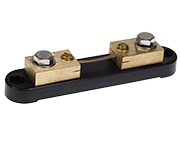
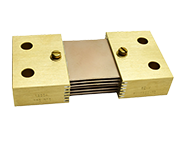
Shunts for DC Current Measurement and Circuit Monitoring
Shunts are precision low-resistance devices used to measure DC current by creating a small, proportional voltage drop across a known resistance value. This allows high current levels to be monitored safely without routing the full current directly through sensitive measurement devices. In industrial electrical systems, shunts are commonly used with meters, monitoring equipment, power supplies, battery systems, and control panels where accurate current measurement is required.
In practical applications, shunts are installed in series with the load so that current passes through the resistive element. The resulting millivolt signal can then be measured by a compatible meter, controller, or monitoring device. This makes shunts useful in applications such as DC drives, battery charging systems, rectifiers, electroplating equipment, renewable energy systems, and industrial power monitoring. They may also be used alongside panel meters and gauges or other process and instrumentation devices to provide clear visibility into system current levels.
Shunts are available in different mounting styles to support specific installation requirements. Base mount shunts are commonly used where the device needs to be securely mounted to a panel or enclosure, while busbar mount shunts are designed for integration directly into busbar assemblies or high-current distribution systems. Choosing the correct mounting style helps ensure safe installation, proper heat dissipation, and reliable electrical performance.
When selecting a shunt, key considerations include current rating, millivolt output, accuracy class, resistance value, mounting configuration, and environmental conditions. The shunt must be sized for the expected continuous current and should be matched to the input range of the connected meter or monitoring equipment. Proper selection ensures accurate measurement, minimizes power loss, and helps protect downstream equipment from incorrect current readings or overload conditions.
Frequently Asked Questions
How does temperature affect shunt accuracy?
Temperature changes can affect the resistance value of the shunt, which may influence measurement accuracy. High-quality shunts are designed with materials that minimize resistance drift over temperature.
Do shunts need regular maintenance?
Yes, maintenance for shunts typically includes checking for loose connections, corrosion, overheating, physical damage, and verifying measurement accuracy during routine electrical inspections.
Can a shunt be oversized?
Yes, but oversizing can reduce measurement resolution at lower currents. The best choice is a shunt rated slightly above the expected maximum current while still providing useful accuracy within the normal operating range.