
Thermocouples
Thermocouples for Industrial Temperature Measurement and Monitoring
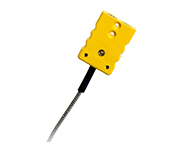
Thermocouples are widely used temperature sensors that generate a small voltage based on the temperature difference between two dissimilar metal conductors. This voltage is interpreted by a meter, controller, transmitter, or monitoring system to provide temperature measurement in industrial and commercial applications. Because thermocouples are durable, cost-effective, and capable of measuring a broad temperature range, they are commonly used in manufacturing, process heating, power generation, ovens, furnaces, and equipment monitoring.
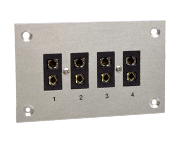
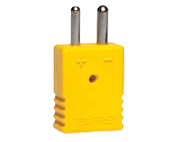
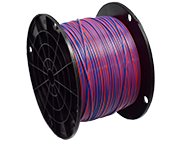
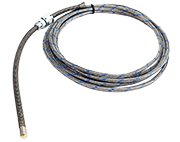
In practical applications, thermocouples are selected based on temperature range, sensor type, installation method, and environmental exposure. Different thermocouple types, such as Type J, K, T, and E, are suited to different temperature ranges and atmospheres. Supporting components such as thermocouple wire, connectors, connector panels, fittings, and harnesses help ensure accurate signal transmission, proper mounting, and organized installation. For larger systems, connector panels and harnesses can simplify wiring between multiple thermocouples and control equipment.
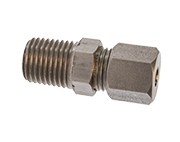
When selecting thermocouples, key considerations include temperature range, accuracy requirement, response time, probe style, sheath material, junction type, and compatibility with the measurement device. Fittings help secure the sensor in the correct location, while connectors and thermocouple wire must match the thermocouple type to avoid signal errors. Proper selection and installation help improve temperature measurement reliability, reduce downtime, and support consistent process control.
Thermocouples are often used alongside other process and instrumentation devices, such as panel meters and gauges, chart recorders, controllers, or temperature monitoring equipment, depending on whether the application requires local display, historical data recording, or automated control. Matching the sensor and accessories to the process environment is essential for accurate and dependable temperature feedback.
Frequently Asked Questions
What is thermocouple drift at elevated temperatures?
Thermocouple drift is a gradual change in output caused by metallurgical changes, oxidation, contamination, or thermal cycling. High-temperature exposure accelerates drift, which is why periodic verification or replacement is important in critical applications.
How does electrical noise affect thermocouple signals?
Thermocouple signals are very low voltage, so electrical noise from motors, drives, contactors, and power wiring can distort readings. Shielded cable, proper grounding, isolation, and separation from power conductors help reduce interference.
How do I know when a thermocouple needs replacement?
A thermocouple should be replaced if readings become unstable, drift outside expected ranges, response time slows, insulation is damaged, or the probe shows corrosion, oxidation, or mechanical wear.