
Transistors
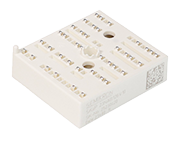
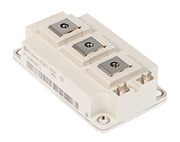
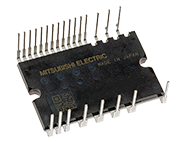
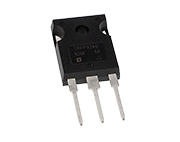
Transistors for Electronic Switching, Amplification, and Power Control
Transistors are semiconductor devices used to switch or amplify electronic signals and electrical power. They are fundamental components in modern electronics, supporting applications ranging from low-power signal circuits to high-power industrial switching systems. In industrial equipment, transistors are commonly used in power supplies, motor drives, inverters, control boards, automation systems, and electronic repair applications.
Different transistor technologies are selected based on voltage, current, switching speed, efficiency, and control requirements. MOSFETs are widely used for fast switching and efficient power control, particularly in power supplies, DC switching circuits, and low- to medium-voltage applications. IGBTs combine characteristics of MOSFETs and bipolar transistors, making them well suited for higher-voltage and higher-current applications such as motor drives, industrial inverters, welders, and power conversion systems.
Transistor-based assemblies are also used where higher integration and thermal performance are required. IPMs, or intelligent power modules, integrate power switching devices with drive, protection, and control functions to simplify design and improve reliability. CIM devices provide compact integrated module solutions for power electronics applications where space savings, efficient switching, and dependable thermal performance are important.
When selecting transistors or transistor modules, key considerations include voltage rating, current rating, switching frequency, gate drive requirements, package style, thermal resistance, and compatibility with the circuit design.
Proper transistor selection helps improve switching efficiency, reduce power loss, manage heat generation, and support reliable long-term operation. Whether used for signal amplification, discrete switching, power conversion, or integrated module applications, transistors play a critical role in electronic control and industrial power systems.
Frequently Asked Questions
What is the difference between a transistor and a diode?
A diode allows current to flow mainly in one direction, while a transistor can control current flow based on an input signal. Diodes are commonly used for rectification and protection, while transistors are used for switching, amplification, and power control.
What causes a transistor to fail?
Common causes of transistor failure include overvoltage, overcurrent, overheating, electrostatic discharge, poor heat dissipation, incorrect wiring, short circuits, and operation outside the device's rated limits.
Do transistors need regular maintenance?
Yes, maintenance for transistor-based equipment typically includes checking for overheating, damaged packages, loose connections, degraded heat sinks, poor solder joints, and signs of electrical stress. The transistor itself has no moving parts, but the surrounding circuit and thermal components should be inspected regularly.